

How to Standardize Quality Across Multiple Plants Without Killing Local Flexibility
Running the same product through different plants should not feel like managing different companies. When every site has its own way of handling deviations, approvals, and inspections, issues slip through, audits get stressful, and fixes don't stick. In this guide, we'll walk through a practical way to create one shared quality backbone across plants, so you get consistent control where it counts and keep the local flexibility your teams need.
Let's define what "standard" should really mean across plants
Standardization gets a bad reputation in multi-plant organizations because it is often confused with uniformity. Nobody wants a corporate initiative that forces Plant A in Germany to operate identically to Plant B in Malaysia. That is not the goal, and it is not realistic.
What standardization actually means in a multi-plant context is building one shared quality language: common definitions, shared data structures, and aligned approval logic, so that when a deviation is raised in one site, it looks and behaves the same as one raised in another. The execution details: how operators complete a form, which language is used on a checklist, the physical layout of an inspection station can and should stay local.
The right mental model is a global quality backbone that every plant plugs into. At the center of that backbone sits one source of truth: shared defect codes, consistent severity levels, standard CAPA workflows, and cross-plant reporting built on the same data definitions. AlisQI is designed around exactly this principle core process standardization without forcing identical execution, which is what makes multi-plant rollouts manageable rather than overwhelming.
Here's how to pick the core processes that must look the same
Not every quality process needs to be standardized first. Trying to align everything at once is how multi-plant harmonization projects stall. The better approach is to identify the processes where inconsistency creates the most business risk and start there.
The highest-priority candidates are typically: nonconformance and deviation management, CAPA and root cause analysis, change control, customer complaint management, incoming goods inspection, and audit management. These are the processes where a different interpretation at each plant leads directly to recurring deviations, inconsistent release decisions, and audit findings that keep appearing on the same list year after year.
Start with three to five core processes that touch every plant. Once those run on a common model, expanding to adjacent processes becomes much easier, because the data structures, workflows, and governance habits are already in place.
What needs to be identical and what can stay local?
Once you have identified your priority processes, define clearly which elements must be identical across all sites and which can be adapted locally. This distinction is the foundation of quality process harmonization done well.
Global non-negotiables typically include: defect category definitions and severity levels, mandatory data fields on inspection and nonconformance records, approval roles and escalation rules, traceability requirements linking batches to inspections and actions, and the core steps of CAPA workflows including root cause methods and verification of effectiveness.
Local flexible areas typically include: the frequency of specific in-process checks (where regulations allow), the language used on operator-facing forms, visual layouts, local work instruction details specific to a product line or regulatory environment, and communication templates for internal escalations.
The practical output of this exercise is a one-page "Global Quality Principles and Boundaries" document: one column for "fixed globally," one for "adaptable locally," one listing who owns each decision. Sharing this with plant managers and corporate quality leadership before any software configuration starts avoids the most common rollout conflict: a plant team feeling that a global standard ignores their operational reality.
In AlisQI, mandatory fields and approval rules can be set at the global level. Local administrators can adjust form layouts and language without touching the underlying data model. The result is a system that can enforce what matters and stay flexible where it should be.
Here's how a common digital backbone makes multi-plant control realistic
A shared process model described in documents is a good start. A shared digital backbone is what makes it stick at scale.
The core value of a multi-plant QMS is a single shared data model. When every plant uses the same defect codes, cause codes, product identifiers, and action categories, you can finally answer questions like: "Which defect type is most common across all sites?" or "Is Plant C resolving CAPAs faster than Plant A, and if so, why?" Without shared data structures, those comparisons require hours of manual work every time someone in leadership asks.
AlisQI Solvers are configured on a shared platform. A Deviation Management Solver configured for the global standard can be deployed to a new plant with minor local adjustments — language, relevant product lines, local approval contacts — without rebuilding the workflow from scratch. Plant teams manage their own configurations within the boundaries corporate quality has set.
Statistical Process Control and Internal and External Quality Reporting become far more powerful when they draw from a consistent data model across sites. A shared SPC dashboard lets operations leadership see process capability trends across all plants using the same definitions and chart types. An external quality report sent to a customer can be assembled from a single source rather than compiled from five different spreadsheet formats.
End-to-end Traceability is another area where a shared backbone pays off immediately. When a quality issue surfaces, whether a customer complaint or an internal deviation, tracing it back through batches, raw materials, and supplier lots across multiple sites is only practical if traceability records share a common structure. AlisQI connects lab data, production data, and quality records in one place, which means a cross-plant traceability investigation takes hours rather than days.
The same standardization logic extends beyond production lines. Document Control, Quality Manual, and Training keep procedures and competencies aligned across every site when a global SOP is updated, training requirements are automatically flagged for affected roles at all plants simultaneously. And through Supplier Quality and EHS modules, the same shared backbone extends to supplier management and safety management, so the standardization mindset does not stop at the production line.
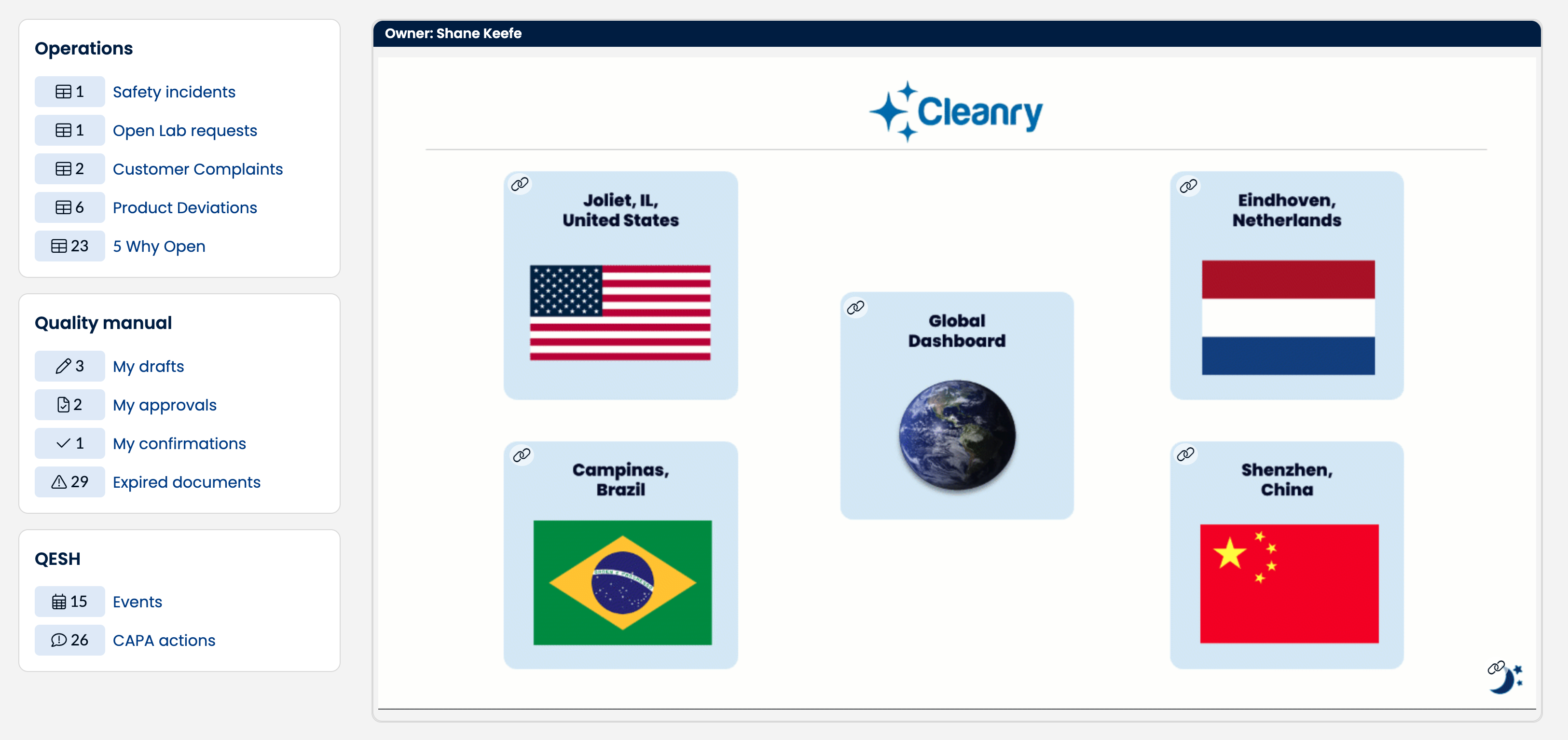
How do you roll this out without overwhelming every site?
The fastest way to stall a standardization project is to announce a simultaneous rollout to every site. A pilot-first model works better. Choose one or two plants, focus on a small defined problem, recurring deviations with slow closure times, for example, and use that scope to configure and validate the relevant AlisQI Solvers.
AlisQI's SolverLaunch methodology is built for exactly this. Rather than a full QMS implementation across all modules and sites, SolverLaunch defines one clear operational problem, deploys the Solvers that solve it, and validates the impact before expanding. Your first site deployment produces measurable results, faster deviation closure, cleaner audit trails, fewer repeat issues, that you can show other plant managers before asking them to change how they work.
Once validated, rolling out to additional plants is largely a matter of reusing the same Solver setup with local adjustments. The global data model, mandatory fields, and reporting dashboards carry over. This is the practical meaning of "expand without rebuilding."

Next steps if you want one shared quality backbone across plants
Before starting a multi-plant rollout, spend 30 minutes with your core team on a few honest questions: How many plants currently use different procedures for the same quality process? Does deviation closure time vary significantly between sites? Could you identify the top three recurring issues across all sites in under an hour?
The answers tell you exactly where your standardization gaps are and which Solvers to start with. The lowest-risk path forward is to map those gaps to a suggested AlisQI Solver set, pick one clearly defined problem, and run a SolverLaunch pilot at one or two sites. You'll see real improvement before committing to a full multi-site rollout — and you'll have the evidence to bring other plant managers on board with confidence.-png.png)
Ready to see what a multi-plant configuration could look like for your operation?
Get my Solver recommendations - tell us your top cross-site quality challenges and we'll suggest a starting point tailored to your plants. Or book a no-pressure call to walk through a pilot scenario focused on your most pressing cross-site challenge.
Frequently Asked Questions
